
That approach overlooks whether sales will actually use it. Pilots should measure whether AI supports real conversations and fits seamlessly into workflows. Adoption and reduced friction matter more than flashy metrics. In private equity, budgets are tight and timelines short. Skipping this learning step only shifts costs into expensive fixes later.
It started over coffee. One of those quick Cortado conversations that unlocks something big and keeps you thinking long after it ends. We were talking about how many portfolio companies charge into big initiatives like ABM, AI, and GTM overhauls without really knowing whether the engine can support the race. It wasn’t the first time we’d heard this from someone in your seat. You’re under pressure to deliver growth acceleration, not experiments. The tension is simple: launching full-scale programs without real validation wastes time and budget, erodes trust, drains credibility, and makes it harder to course correct.
That’s where a structured pilot mindset becomes indispensable. This isn’t about slowing down. It’s about speeding up the right way by testing, learning, and scaling with intention.
When done right, a pilot helps you:
- See what your teams don’t
- Fix what’s broken before it spreads
- Move faster with less friction
Pilots save capital, expose hidden gaps, and align cross-functional teams in ways that quarterly reviews never will.
Here’s what happens when pilots shift from side projects to strategic levers:
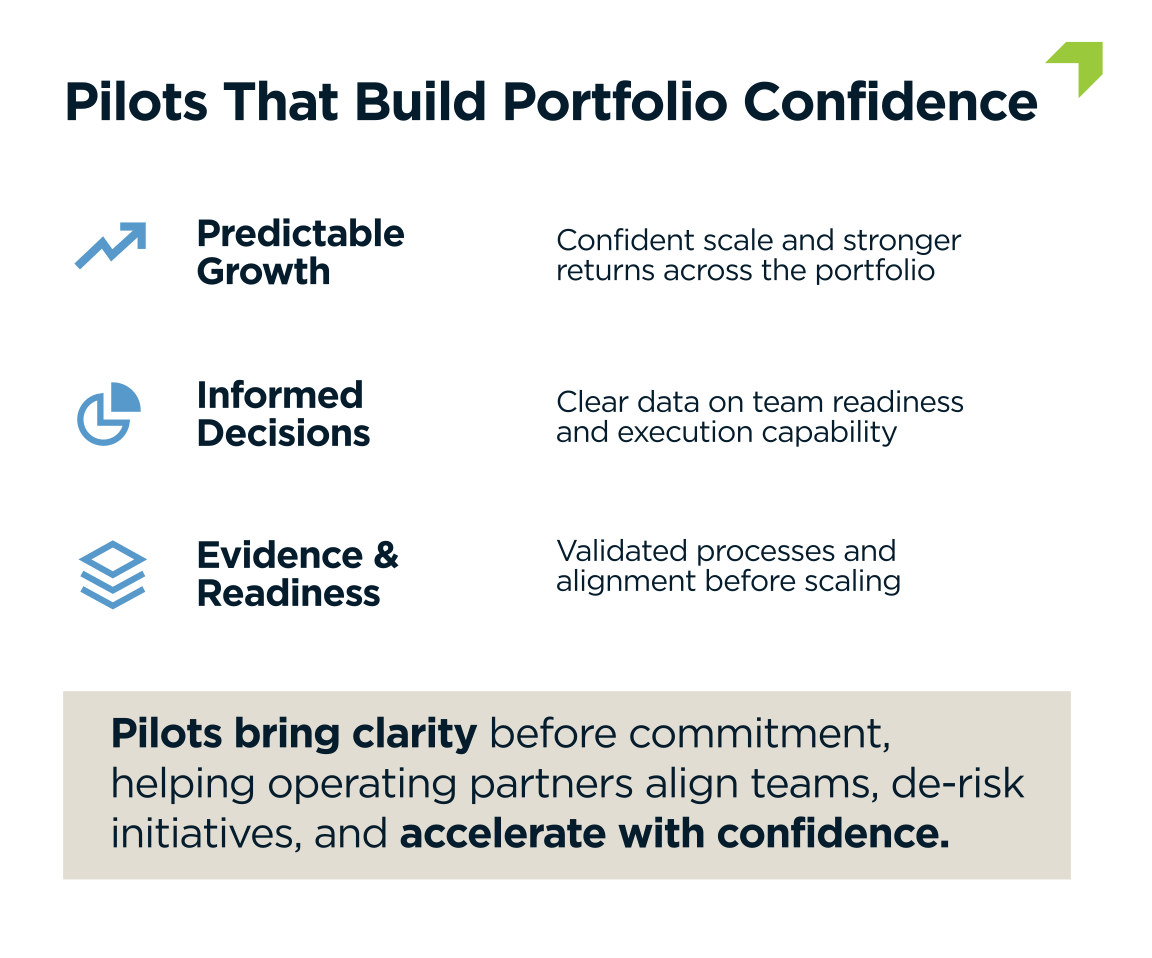
Let’s break down why PE-backed companies can better leverage pilots and how you can propel your portfolio toward it without losing momentum.
Demystifying the Pilot Campaign: It’s Not Just a Mini Campaign
Many teams treat pilots as smaller campaigns without understanding their true role. Pilots exist to prove processes before scaling. They test whether sales, marketing, and operations can deliver together while uncovering gaps at a lower cost. Without pilots, teams gamble on assumptions that often fail during full rollout.
A pilot ensures alignment across teams by forcing tough questions. For example, Account-Based Marketing pilots should confirm that marketing can personalize at scale and that sales will take action using the custom materials and talk tracks. They also reveal whether teams share definitions of target accounts and goals. Without this step, sales and marketing often pursue different objectives.
Piloting uncovers these misalignments early. It finds gaps in process, incentives, and culture that would derail expensive rollouts. This isn’t about slowing initiatives but making sure they’re ready. Pilots reduce risk and create conditions for faster, more confident scaling when real money is on the line.
Structured Simplicity: Reducing Complexity to Increase Clarity
Complex pilots often fail quietly because they test too much at once and hide real problems behind noise. A disciplined pilot simplifies inputs to expose the true causes of failure. This approach requires teams to limit accounts, channels, and hypotheses so the test remains focused.
By controlling variables, pilots provide clarity about what actually works. Teams can see if failures result from process design, team behavior, or technology gaps. Simplicity also demands clear ownership, ensuring everyone knows their role in follow-up, content delivery, and tech management. Without this clarity, confusion and blame-shifting surface too late to fix cheaply.
We saw a client rush into ABM without piloting. They had strong content and data but operated from two very different target account definitions. The full launch failed, wasting budget and time. A simple pilot would have forced alignment before resources were committed. Simplified pilots reveal friction, test teamwork, and encourage the tough conversations that build scalable processes.
Insights Over Outcomes: Measuring What Actually Matters
Pilots should not be measured with the same metrics used for scaled campaigns. Traditional KPIs like revenue or pipeline lift don’t capture readiness. Pilots should focus on learning by tracking process friction, adoption rates, and cross-functional alignment.
If teams only measure conversions or leads, they miss critical signs of failure. A good pilot identifies where processes break and how quickly teams adjust. It also shows if new workflows reduce friction or create confusion. For example, teams often judge AI-generated content by volume or engagement.
A Private Equity Lens on Piloting
Operating partners balance the pressure to move fast with the risk of costly failures. The push to show quick wins can tempt teams to skip pilots altogether. But moving fast without validation creates hidden risks that often emerge at the worst time.
Pilots manage this risk by producing real evidence of readiness. They help leaders present clear data to CEOs and fund managers. Instead of making promises, they can show proof of process alignment and team capability. Pilots also test leadership and teamwork under realistic conditions.
Building a Pilot Culture to Scale with Confidence
Pilots should not be limited to special projects or major bets. They need to become part of how portfolio companies operate. A pilot culture expects teams to prove ideas before full launch and rewards disciplined learning.
This mindset turns pilots from perceived obstacles into essential planning steps. Teams learn to design focused tests and share insights openly. Over time, pilots become faster to execute because teams plan for them from the start.
They understand that pilots reduce wasted spend and prevent the need for large-scale fixes. Embracing pilots as standard practice delivers important advantages: faster validated launches, reduced failure costs, and stronger cross-functional teamwork.
Piloting is not about avoiding risk for its own sake. It is about ensuring resources are used wisely and scaling only what works. Private equity demands this discipline because success depends on making smart, evidence-based investments with limited time and budget.
If you would like to have a conversation about how to incorporate piloting best practices, schedule time with me to discuss how my team can help.